
Plastic Families
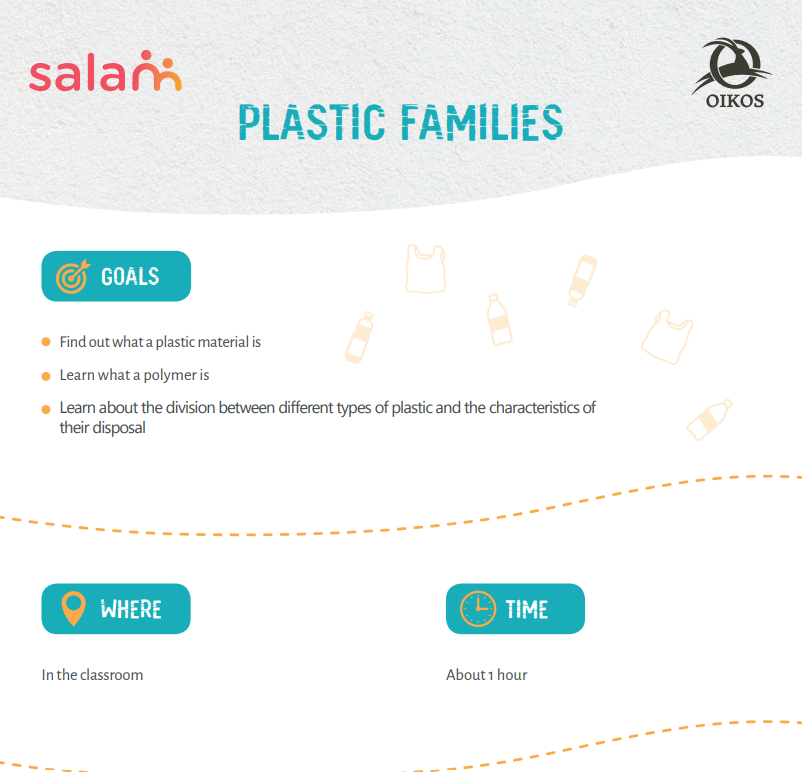
An interactive one-hour classroom lesson that helps students understand polymers, identify common plastic families and learn how different plastics should be recycled or disposed of.
Course Description
Plastic is not a single material. It includes several families with different properties, uses and levels of recyclability. This lesson introduces students to the meaning of plastic and explains, through a simple physical demonstration, how monomers join together to form polymer chains.
Students then explore the difference between thermoplastics and thermosetting plastics and become familiar with common plastic categories, including PET, HDPE, PVC, LDPE, PP and PS. Through a movement-based family-matching game, they identify plastic objects, interpret recycling symbols and group items according to their material.
The lesson concludes with a discussion of the characteristics, common applications and recycling challenges of each plastic family. It encourages students to make more informed consumption choices and dispose of plastic waste correctly.
What you will learn
- Understand what plastic is and how polymers are formed from monomers.
- Distinguish between major plastic families and recognise their recycling symbols.
- Compare the uses, properties and recyclability of PET, HDPE, PVC, LDPE, PP and PS.
- Understand why some plastics are easier to recycle than others.
- Make more responsible choices about plastic consumption and disposal.
Lesson materials
Can't view the PDF? Open in new tab
Need Help?
If you are having trouble accessing this resource or have questions about the content, our support team is here to assist you.
Send Email